The Health Benefits of Eating Tuna: Five Major Benefits for Human Health
Tuna is one of the most popular and nutritious fish consumed around the world. It is found in oceans across the globe and is enjoyed in many forms, including fresh, grilled, baked, canned, and sushi. Tuna is highly valued not only for its delicious taste but also for its outstanding nutritional value. It is rich in high-quality protein, omega-3 fatty acids, vitamins, and minerals that are essential for maintaining good health. Nutrition experts often recommend eating fish like tuna because it provides many health benefits while being relatively low in saturated fat.
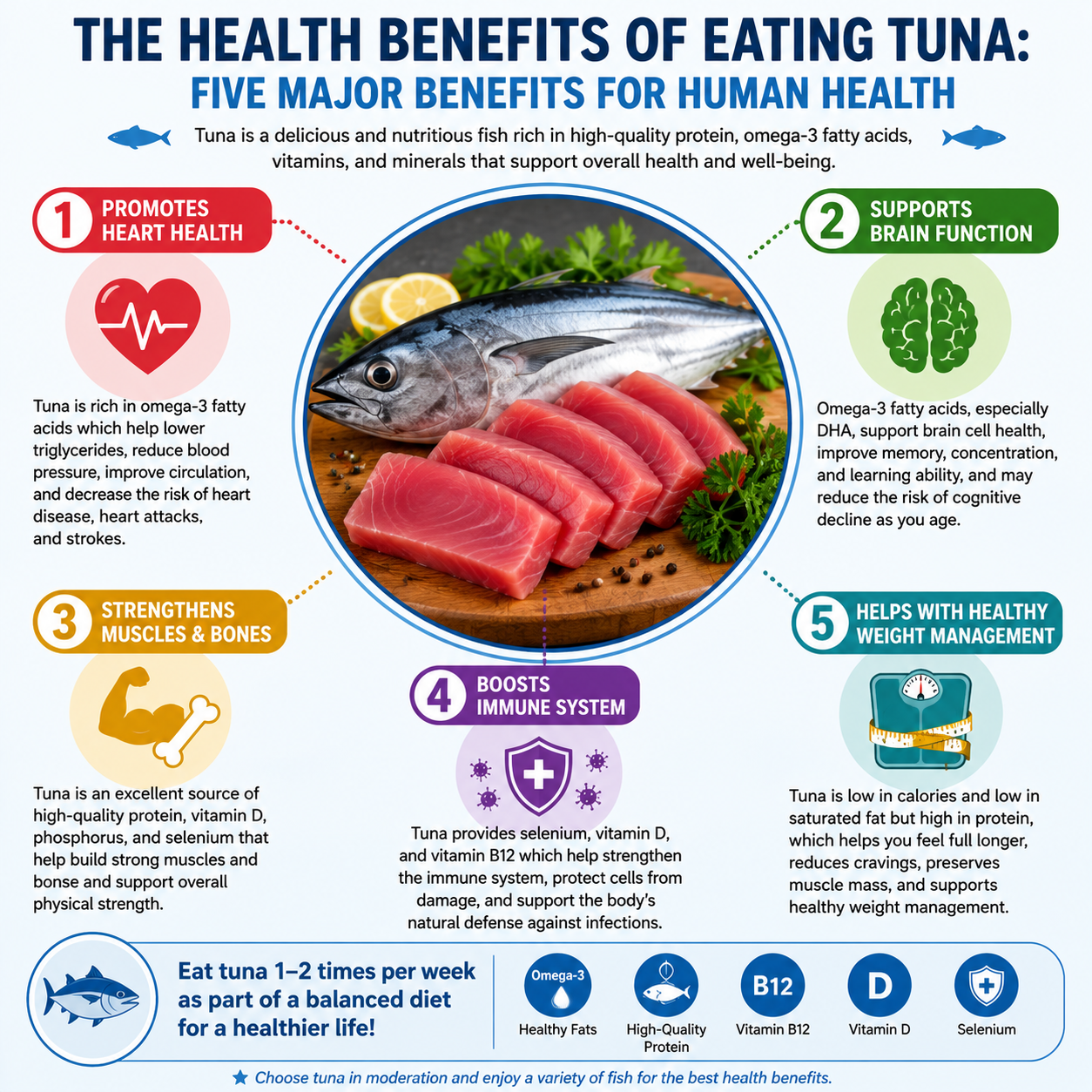
This essay discusses five major health benefits of eating tuna: promoting heart health, supporting brain function, strengthening muscles and bones, boosting the immune system, and helping with healthy weight management.
1. Tuna Promotes Heart Health
One of the greatest health benefits of eating tuna is its ability to support a healthy heart. Tuna is an excellent source of omega-3 fatty acids, which are healthy fats known to protect the cardiovascular system. Omega-3 fatty acids help lower triglyceride levels in the blood, reduce inflammation, and decrease the risk of heart disease.
Eating tuna regularly may also help lower blood pressure and improve blood circulation. These benefits reduce the chances of heart attacks and strokes. In addition, omega-3 fatty acids help maintain healthy blood vessels and reduce the buildup of plaque inside arteries. As a result, including tuna in a balanced diet can contribute to long-term heart health and improve overall cardiovascular function.
2. Tuna Supports Brain Function
Another important benefit of tuna is its positive effect on brain health. The omega-3 fatty acids found in tuna, especially DHA (docosahexaenoic acid), play a vital role in brain development and function. DHA is a major structural component of the brain and helps maintain healthy brain cells.
Regular consumption of tuna may improve memory, concentration, and learning ability. It can also support mental performance in students and working adults. Some studies suggest that diets rich in omega-3 fatty acids may reduce the risk of age-related cognitive decline and certain neurological disorders.
Tuna also contains vitamin B12 and niacin, which are essential for maintaining healthy nerve cells and supporting normal brain function.
3. Tuna Strengthens Muscles and Bones
Tuna is an excellent source of high-quality protein, making it one of the best foods for building and repairing body tissues. Protein is necessary for muscle growth, recovery after exercise, and maintaining healthy skin, hair, and organs.
Athletes and physically active individuals often include tuna in their diets because it provides lean protein without excessive saturated fat. Tuna also contains important minerals such as phosphorus, selenium, and vitamin D, which help strengthen bones and teeth. Vitamin D improves the body’s ability to absorb calcium, reducing the risk of weak bones and osteoporosis later in life.
By providing both protein and essential minerals, tuna supports strong muscles, healthy bones, and overall physical fitness.
4. Tuna Boosts the Immune System
Tuna contains several nutrients that help strengthen the immune system. It is rich in selenium, a powerful antioxidant that protects body cells from damage caused by free radicals. Selenium also helps regulate the immune system and supports the body’s defense against infections.
In addition, tuna provides vitamins D and B12, which play important roles in maintaining healthy immune cells. These nutrients help the body respond effectively to bacteria, viruses, and other harmful microorganisms.
A healthy immune system reduces the risk of illness and allows the body to recover more quickly when infections occur. Including tuna in a balanced diet can therefore contribute to better overall health and disease prevention.
5. Tuna Helps with Healthy Weight Management
The fifth major benefit of tuna is that it supports healthy weight management. Tuna is naturally low in calories and saturated fat while being rich in protein. High-protein foods increase feelings of fullness, helping people eat less and reduce unnecessary snacking.
Because tuna is nutrient-dense, it provides essential vitamins and minerals without excessive calories. This makes it an excellent food choice for individuals who are trying to lose weight or maintain a healthy body weight.
Furthermore, the protein in tuna helps preserve muscle mass during weight loss, which is important for maintaining a healthy metabolism. Replacing high-fat processed foods with tuna can contribute to healthier eating habits and improve overall body composition.
Conclusion
Tuna is one of the healthiest seafood choices available. It is packed with valuable nutrients, including high-quality protein, omega-3 fatty acids, vitamins, and minerals that support many aspects of human health. When eaten as part of a balanced diet, tuna provides numerous benefits for people of all ages.
The five major health benefits of tuna include promoting heart health, supporting brain function, strengthening muscles and bones, boosting the immune system, and helping with healthy weight management. These benefits demonstrate why nutrition experts encourage people to include fish in their weekly meals.
However, tuna should be consumed in moderation. Some large species of tuna may contain higher levels of mercury, so health authorities recommend limiting consumption, especially for pregnant women and young children. Choosing light tuna or eating a variety of different fish can help reduce this concern while still providing important nutritional benefits.
In conclusion, tuna is a delicious, versatile, and highly nutritious food that contributes to a healthy lifestyle. Its rich supply of essential nutrients makes it an excellent choice for maintaining a strong heart, a healthy brain, powerful muscles, a strong immune system, and a healthy body weight. By including tuna in a balanced and varied diet, individuals can enjoy both its excellent flavor and its many long-term health benefits.