The Health Benefits of Eating Lobster: Five Major Benefits for Human Health
Lobster is one of the most prized seafood delicacies in the world. It is well known for its sweet, tender meat and rich flavor, making it a favorite dish in many countries. Besides its delicious taste, lobster is packed with essential nutrients that contribute to good health. It is an excellent source of high-quality protein, vitamins, minerals, and healthy omega-3 fatty acids. Lobster is also relatively low in calories and saturated fat, making it a nutritious choice when prepared using healthy cooking methods such as steaming, boiling, grilling, or baking. When eaten in moderation as part of a balanced diet, lobster offers many important health benefits.
This essay discusses five major health benefits of eating lobster: providing high-quality protein, promoting heart health, supporting brain function, strengthening bones and the immune system, and helping with healthy weight management.
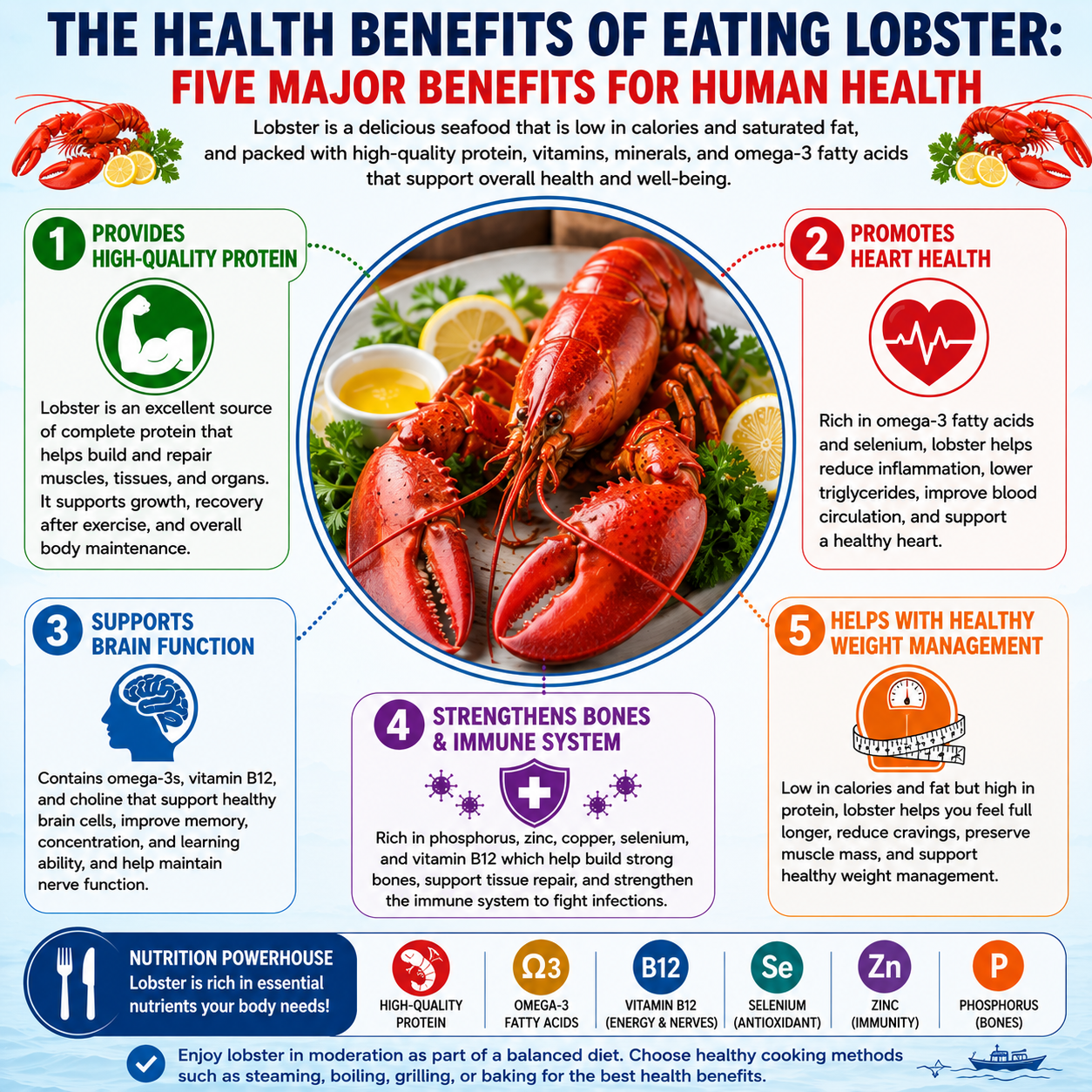
1. Lobster Provides High-Quality Protein
One of the greatest health benefits of lobster is its high-quality protein content. Protein is an essential nutrient that the body needs to build and repair muscles, tissues, skin, hair, and organs. It also helps produce enzymes and hormones that regulate many body functions.
Lobster contains complete protein, meaning it provides all nine essential amino acids that the human body cannot produce on its own. These amino acids are necessary for muscle growth, tissue repair, and maintaining overall health. Athletes, growing children, and older adults can especially benefit from eating lobster because it helps support muscle strength and recovery after physical activity.
Unlike many red meats, lobster is naturally low in saturated fat, making it a healthier source of protein.
2. Lobster Promotes Heart Health
Another important health benefit of lobster is its positive effect on heart health. Lobster contains omega-3 fatty acids, which help reduce inflammation and support healthy blood vessels. Omega-3 fats may help lower triglyceride levels and improve blood circulation, reducing the risk of cardiovascular disease.
Lobster is also a good source of selenium, a powerful antioxidant that protects body cells from damage caused by free radicals. Selenium helps reduce oxidative stress and supports healthy heart function.
Although lobster contains dietary cholesterol, research suggests that moderate consumption as part of a healthy, balanced diet does not significantly increase the risk of heart disease for most healthy individuals. Choosing steamed or grilled lobster instead of dishes prepared with excessive butter or cream makes it a healthier option.
3. Lobster Supports Brain Function
Lobster contains several nutrients that are essential for maintaining healthy brain function. It provides omega-3 fatty acids, vitamin B12, and choline, all of which support brain development, memory, concentration, and healthy nerve function.
Vitamin B12 helps maintain healthy nerve cells and assists in producing red blood cells that deliver oxygen throughout the body, including the brain. Choline is another important nutrient that supports communication between brain cells and contributes to memory formation and learning ability.
Regular consumption of nutrient-rich seafood like lobster may help maintain mental performance and reduce the risk of age-related cognitive decline.
4. Lobster Strengthens Bones and the Immune System
Lobster is rich in minerals that contribute to strong bones and a healthy immune system. It contains phosphorus, zinc, copper, selenium, and vitamin B12, which work together to maintain healthy bones, support tissue repair, and strengthen the body’s natural defenses.
Selenium and zinc are particularly important because they help immune cells function effectively and protect the body from infections. These minerals also act as antioxidants that protect cells from damage caused by harmful free radicals.
The phosphorus in lobster contributes to healthy bones and teeth by supporting the body’s use of calcium. As a result, eating lobster in moderation can help maintain both skeletal strength and immune health.
5. Lobster Helps with Healthy Weight Management
The fifth major benefit of lobster is that it supports healthy weight management. Lobster is naturally low in calories and fat while providing a high amount of protein. High-protein foods help people feel full for longer periods, reducing hunger and preventing overeating.
Because lobster is nutrient-dense, it provides essential vitamins and minerals without excessive calories. This makes it an excellent food choice for individuals who want to lose weight or maintain a healthy body weight.
Protein also helps preserve lean muscle mass during weight loss, supporting a healthy metabolism. However, to maximize these benefits, lobster should be prepared using healthy cooking methods instead of being served with large amounts of butter or creamy sauces.
Conclusion
Lobster is not only a luxurious seafood but also a highly nutritious food that offers many health benefits. It provides high-quality protein, omega-3 fatty acids, vitamins, minerals, and antioxidants that support overall health and well-being.
The five major health benefits of lobster include providing high-quality protein, promoting heart health, supporting brain function, strengthening bones and the immune system, and helping with healthy weight management. These nutritional benefits make lobster an excellent addition to a balanced diet when eaten in moderation.
However, lobster should be consumed responsibly. Some people may have shellfish allergies, and lobster dishes prepared with excessive butter, cream, or salt may reduce their health benefits. Choosing fresh lobster and healthy cooking methods such as steaming, boiling, grilling, or baking helps preserve its nutritional value.
In conclusion, lobster is a delicious and nutritious seafood that supports a healthy lifestyle. By including lobster as part of a balanced diet, individuals can enjoy its outstanding flavor while benefiting from stronger muscles, a healthier heart, improved brain function, a stronger immune system, healthier bones, and effective weight management.