The Health Benefits of Corn: Five Major Benefits for Human Health
Corn is one of the most widely grown and consumed crops in the world. It is a staple food in many countries and can be prepared in various ways, including boiling, roasting, steaming, and grinding into flour. Corn is not only delicious but also highly nutritious. It contains essential vitamins, minerals, fiber, and antioxidants that contribute to good health. Whether eaten fresh, dried, or processed into healthy food products, corn provides many nutritional benefits. Regular consumption of corn as part of a balanced diet can improve overall health and help prevent certain diseases.
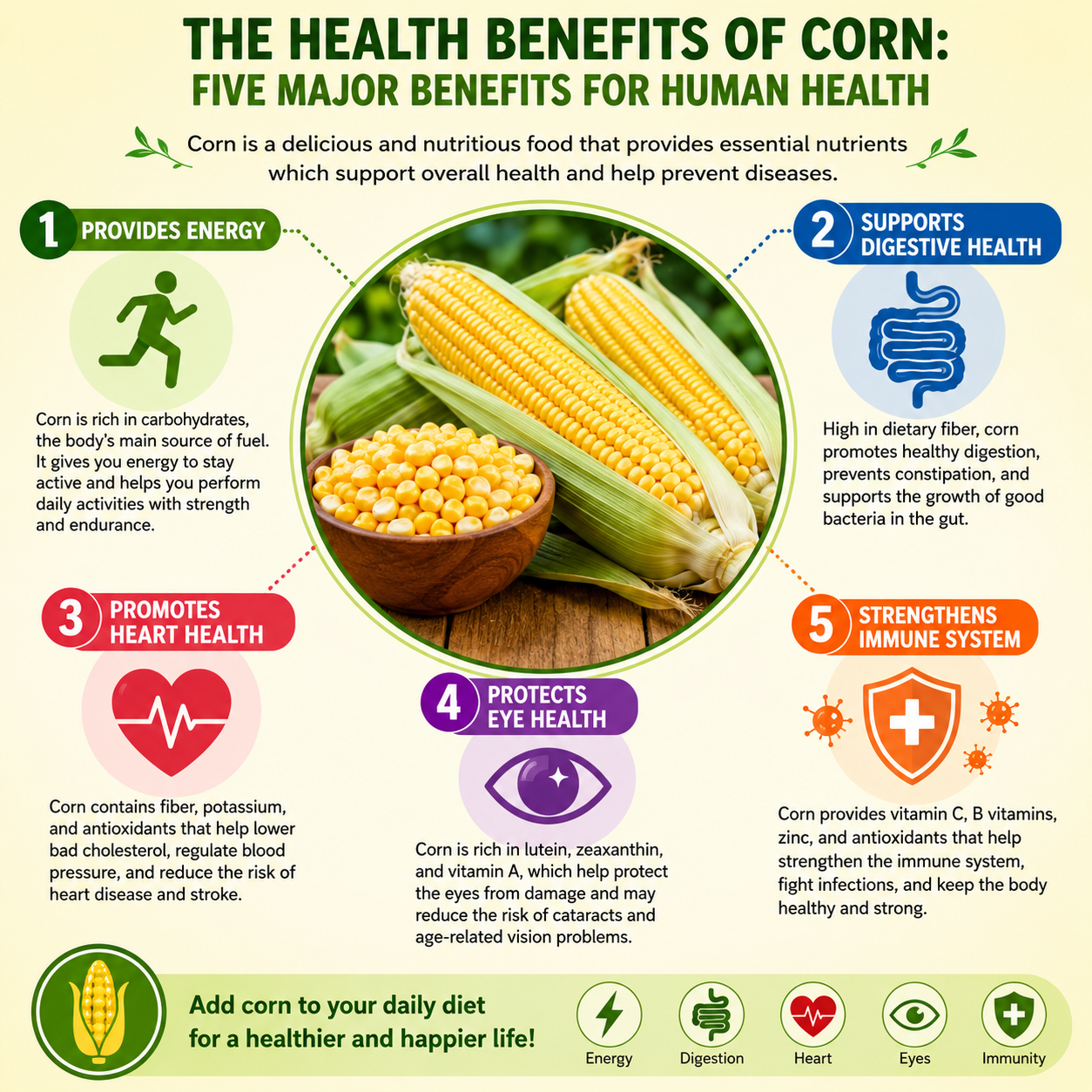
This essay discusses five major health benefits of corn: providing energy, supporting digestive health, promoting heart health, protecting eye health, and strengthening the immune system.
1. Corn Provides Energy
One of the greatest benefits of corn is that it is an excellent source of energy. Corn contains carbohydrates, which are the body’s primary source of fuel. These carbohydrates are converted into glucose, providing energy for daily activities such as studying, working, exercising, and performing household tasks.
In addition to carbohydrates, corn contains small amounts of protein and healthy fats that contribute to maintaining energy levels throughout the day. Athletes and physically active individuals often include corn in their meals because it provides lasting energy without excessive fat. Unlike many processed snacks, fresh corn is a natural and nutritious energy source that can help people stay active and productive.
2. Corn Supports Digestive Health
Another important health benefit of corn is its high dietary fiber content. Fiber plays a crucial role in maintaining a healthy digestive system. It helps food move smoothly through the digestive tract and prevents constipation by promoting regular bowel movements.
Eating enough fiber also supports the growth of beneficial bacteria in the intestines. These healthy bacteria improve digestion, enhance nutrient absorption, and contribute to overall gut health. Furthermore, fiber helps people feel full for longer periods, reducing unnecessary snacking and supporting healthy weight management.
By including corn in a balanced diet, individuals can improve digestive function and reduce the risk of digestive disorders such as constipation and certain intestinal diseases.
3. Corn Promotes Heart Health
Corn also contributes to a healthy heart. It contains dietary fiber, potassium, magnesium, and healthy plant compounds that support cardiovascular health. Fiber helps reduce levels of low-density lipoprotein (LDL), often called “bad cholesterol.” Lower cholesterol levels reduce the risk of clogged arteries and heart disease.
Potassium helps regulate blood pressure by balancing sodium levels in the body. Maintaining healthy blood pressure reduces the risk of heart attacks and strokes. Corn also contains antioxidants that help reduce inflammation and protect blood vessels from damage caused by free radicals.
When consumed as part of a healthy diet that includes fruits, vegetables, whole grains, and lean proteins, corn can contribute to better heart health and improve overall cardiovascular function.
4. Corn Protects Eye Health
Corn is rich in antioxidants known as lutein and zeaxanthin. These natural pigments are especially important for maintaining healthy vision. They accumulate in the retina of the eye, where they help filter harmful blue light and protect eye tissues from damage.
Research has shown that consuming foods rich in lutein and zeaxanthin may reduce the risk of age-related macular degeneration and cataracts, two common causes of vision loss among older adults. Vitamin A, which is also present in corn in small amounts, supports normal vision and helps maintain healthy eye tissues.
Eating corn regularly, along with other colorful fruits and vegetables, can contribute to better eye health throughout life.
5. Corn Strengthens the Immune System
The fifth major benefit of corn is its ability to support the immune system. Corn contains vitamin C, vitamin B complex, zinc, and antioxidants that help the body defend itself against infections and diseases. These nutrients strengthen immune cells and improve the body’s natural defense mechanisms.
Antioxidants protect cells from damage caused by harmful molecules called free radicals. Reducing oxidative stress lowers the risk of chronic diseases and supports healthy aging. Vitamin C also promotes wound healing and helps the body produce collagen, an important protein for healthy skin, blood vessels, and connective tissues.
A strong immune system allows the body to recover more quickly from illness and remain healthy throughout the year.
Conclusion
Corn is much more than a tasty food. It is a nutritious grain that provides numerous health benefits for people of all ages. Its rich combination of carbohydrates, dietary fiber, vitamins, minerals, and antioxidants makes it an excellent addition to a balanced diet.
The five major health benefits of corn include providing energy, supporting digestive health, promoting heart health, protecting eye health, and strengthening the immune system. These benefits demonstrate that corn plays an important role in maintaining overall health and preventing disease.
However, it is important to consume corn in moderation as part of a varied diet. Fresh or minimally processed corn is generally healthier than heavily processed corn products that contain added sugar, salt, or unhealthy fats. By choosing nutritious preparations and combining corn with other healthy foods, individuals can enjoy its delicious taste while gaining valuable health benefits.
In conclusion, corn is a valuable food that supports a healthy lifestyle. Its nutritional value and versatility make it an excellent choice for people seeking to improve their health naturally. Including corn in regular meals can help individuals stay energetic, maintain a healthy digestive system, protect their heart and eyes, strengthen their immune system, and enjoy better overall well-being.