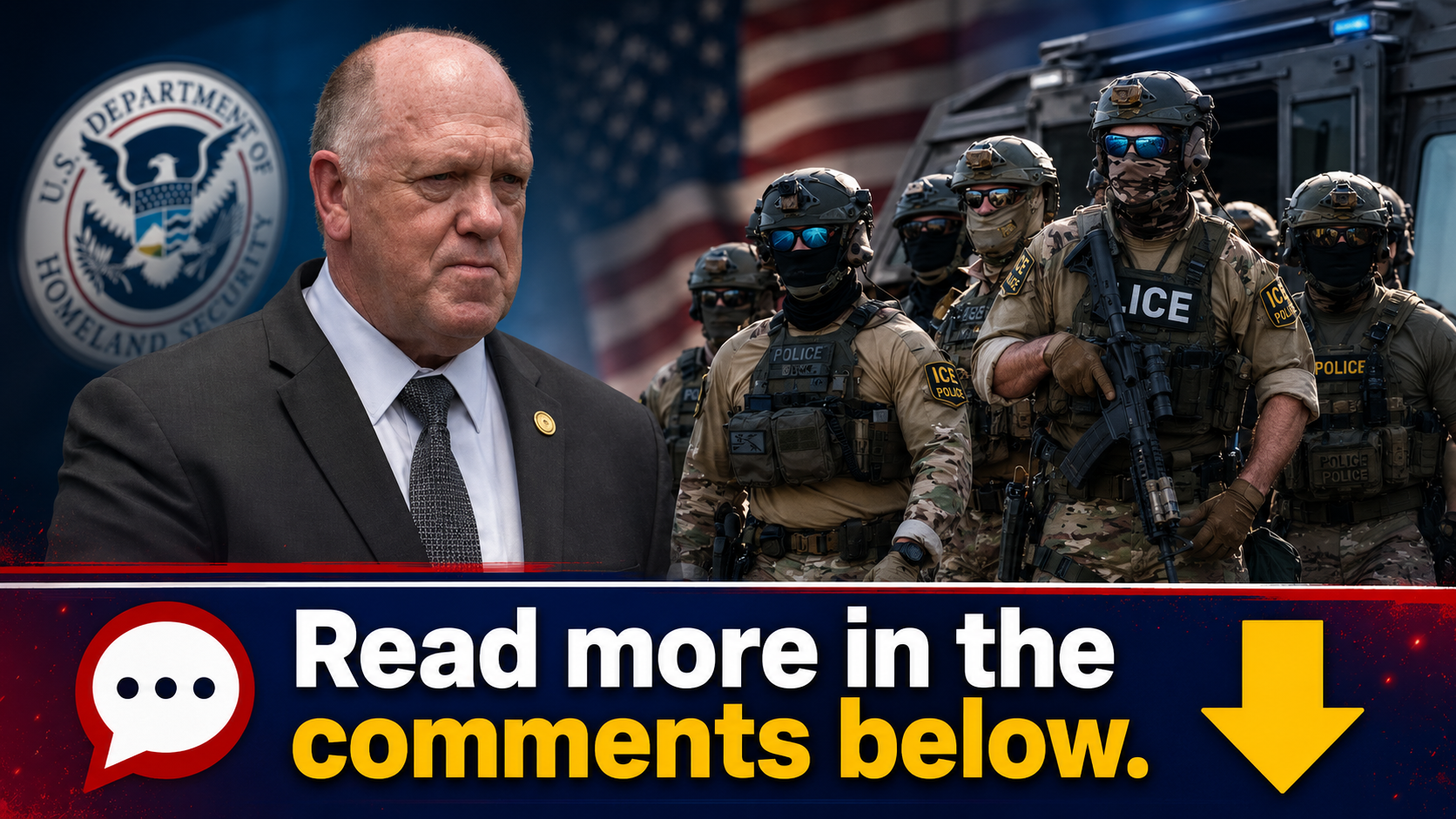
Border Czar Tom Homan Gives New Update on ICE Operations, Body Cameras and Immigration Enforcement
July 20, 2026 — Washington, D.C.
White House Border Czar Tom Homan has provided new details about U.S. Immigration and Customs Enforcement operations as the Trump administration faces growing scrutiny following recent fatal encounters involving ICE officers.
One of the most significant changes is a new push to require body cameras during ICE vehicle-stop operations. Homan said Sunday that he supports broader use of body-worn cameras, arguing that the technology can provide a clearer record of what officers see and do during enforcement encounters.
The announcement follows two recent fatal shootings involving ICE officers during vehicle-related enforcement operations in Texas and Maine. The officers involved were reportedly not wearing body cameras, increasing public demands for greater transparency and accountability.
ICE Moves Toward Body Cameras During Vehicle Stops
According to Reuters, Homan said ICE officers will use body cameras during vehicle stops as the agency responds to controversy surrounding recent enforcement operations.
The body-camera initiative is intended to create video records of interactions between immigration officers and members of the public.
Homan has argued that cameras can help establish what actually happened during disputed encounters and can protect both officers and civilians by providing evidence for subsequent investigations.
ICE previously launched a body-camera pilot program, but broader implementation encountered funding challenges. Homan said cameras have now been purchased and training is underway as the agency works toward wider deployment.
Recent Fatal Shootings Put ICE Under Scrutiny
The policy discussion follows fatal shootings involving ICE officers in Texas and Maine earlier this month.
Reuters reported that ICE temporarily suspended most vehicle stops after the incidents while procedures were reviewed. The pause came amid increasing public and political scrutiny over how immigration enforcement operations are conducted.
The circumstances surrounding the shootings have generated controversy, and investigations are important for determining exactly what occurred.
Homan has said authorities should wait for investigations to establish the facts surrounding the individual cases.
During a July 19 television interview, he defended immigration officers while also expressing support for body cameras as a way to document future encounters.
Vehicle Stops Remain Part of ICE Enforcement
ICE’s use of vehicle stops has been the subject of rapidly changing policy discussions.
After the temporary pause, the administration moved toward allowing vehicle stops to resume. Homan has defended their use as an important tool for immigration enforcement.
Recent guidance reported by Fox News said ICE officers could resume nationwide vehicle stops, with at least one officer on an arrest team required to have a body camera during such operations. Because cameras have not yet reached every ICE field office, the requirement could temporarily limit where and how frequently some vehicle stops are conducted.
The broader body-camera rollout is therefore likely to become an important part of ICE’s operational strategy in the coming weeks.
Homan Defends the Administration’s Immigration Strategy
Homan remains one of the most prominent public defenders of President Donald Trump’s immigration enforcement policies.
The administration has pursued an aggressive deportation strategy since Trump returned to office, deploying federal immigration personnel to communities across the United States.
Homan has repeatedly emphasized that immigration laws will continue to be enforced and has argued that local governments should cooperate with federal immigration authorities, particularly when dealing with people already held in local jails.
The administration describes its strategy as necessary for immigration enforcement and public safety. Critics, however, have raised concerns about aggressive enforcement tactics, civil liberties and the treatment of immigrants during federal operations.
Debate Over “Sanctuary” Jurisdictions Continues
Another important part of Homan’s immigration strategy involves jurisdictions that limit cooperation with federal immigration authorities.
Homan has argued that when local authorities do not give ICE sufficient access to people in jails, federal agents may have to conduct more arrests in communities.
This issue has created continuing conflict between the Trump administration and officials in some Democratic-led states and cities.
Supporters of closer cooperation argue that transferring eligible individuals directly from local custody to federal immigration authorities can reduce the need for street operations.
Opponents of expanded cooperation worry that involving local authorities more deeply in federal immigration enforcement could discourage immigrant communities from cooperating with police or accessing government services.
The debate remains one of the most politically contentious aspects of U.S. immigration policy.
ICE Operations Face Demands for Greater Transparency
The body-camera policy could become an important test of the administration’s response to criticism of immigration enforcement.
Body-camera footage can potentially provide independent evidence when accounts of an incident differ.
However, cameras alone do not resolve every accountability issue. Questions remain about when officers must activate cameras, how footage is stored, when recordings can be released and who is responsible for reviewing incidents.
The effectiveness of the new policy will therefore depend partly on how consistently it is implemented across ICE operations.
What Happens Next?
The next major development will be the broader rollout of body cameras to ICE personnel.
Training is underway, but equipping officers nationwide could take time.
Meanwhile, investigations into the recent fatal encounters in Texas and Maine will continue to receive significant public attention.
The results of those investigations could influence future ICE procedures and intensify debate in Congress and communities across the country about federal immigration enforcement.
Homan has made clear that the Trump administration does not intend to abandon immigration enforcement operations. Instead, the administration appears to be moving toward continuing operations while introducing additional body-camera requirements for certain encounters.
As of July 20, 2026, the key issue is how ICE will balance the administration’s aggressive immigration-enforcement goals with growing demands for transparency and accountability.
The coming weeks will show how quickly body cameras can be deployed, how the new requirements affect ICE vehicle stops, and whether additional operational changes follow the investigations into recent fatal incidents.
This is a developing story, and ICE policies and operational guidance may continue to change.